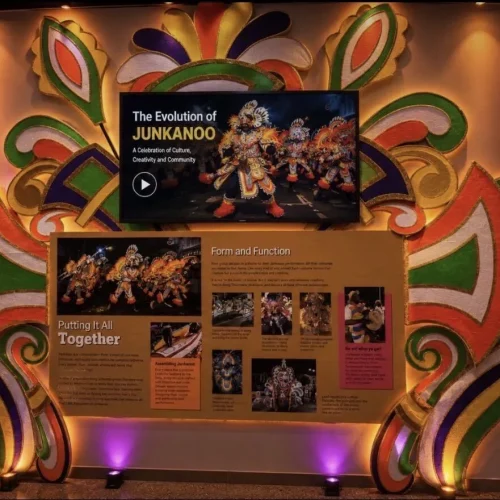
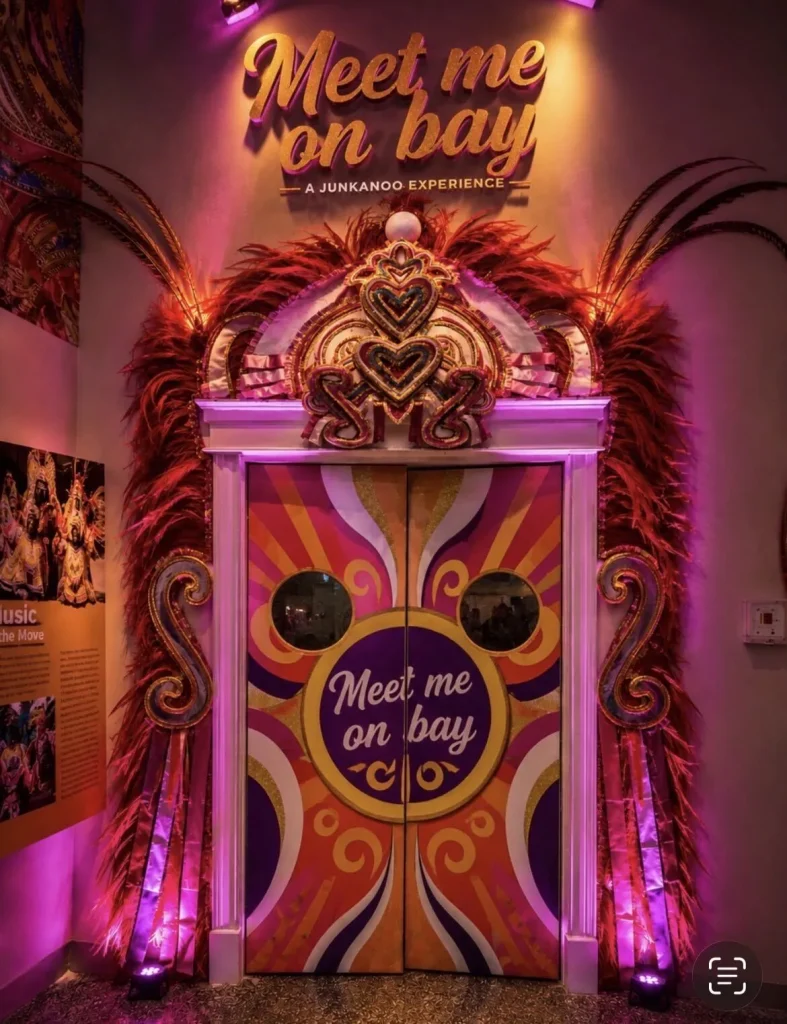
The Bahamas Museum of Junkanoo exists so this story finally gets the spotlight it deserves. Here’s what brought us here, and what you’ll find inside.
More than 300 years in the making
A Brief History of Junkanoo
1700sWest African roots
Masquerade, music and communal celebration crossed the Atlantic with enslaved Africans, carrying traditions that would help shape Bahamian Junkanoo.
Under slaveryThe drums continued
Even as colonial laws restricted African gatherings, music and dance endured particularly during the Christmas season preserving culture, community and identity.
1834Emancipation
With freedom, Junkanoo grew as a public expression of celebration, community and identity, increasingly taking its place on the streets.
Late 1800s–1930sCommunities shape the parade
Neighbourhood rivalries and friendly societies helped bands grow, while costumes evolved from natural and found materials to newspaper, tissue and increasingly elaborate designs.
1942–1948From prohibition to revival
After public parades were banned in 1942, Junkanoo returned on New Year’s Day 1948 with organized competition, prizes and growing recognition of its value to Bahamian tourism.
1950s–1970sThe modern parade emerges
Organized groups, sponsorship, three-dimensional costumes, new instruments and choreography transformed Junkanoo into the large-scale competitive spectacle we know today.
1967A language of national identity
When Majority Rule was achieved, thousands celebrated on Bay Street through spontaneous Junkanoo, demonstrating its power to express a defining national moment.
TodayThe heartbeat of a nation
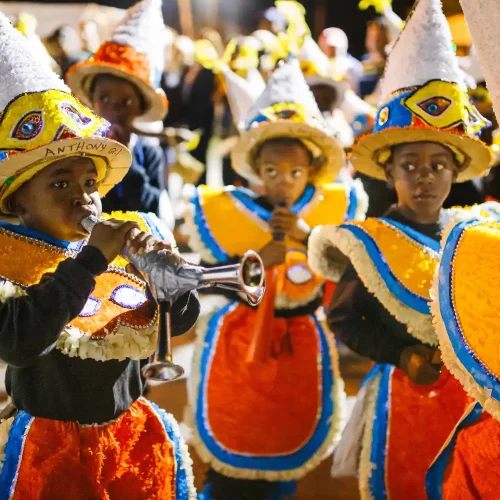
Passed to new generations through traditions including Junior Junkanoo, it remains art, competition, community and celebration, one of the most powerful expressions of Bahamian identity.
The museum walkthrough
What you'll see inside
Five exhibit spaces, one continuous story.
The primary cultural expression
This is Junkanoo
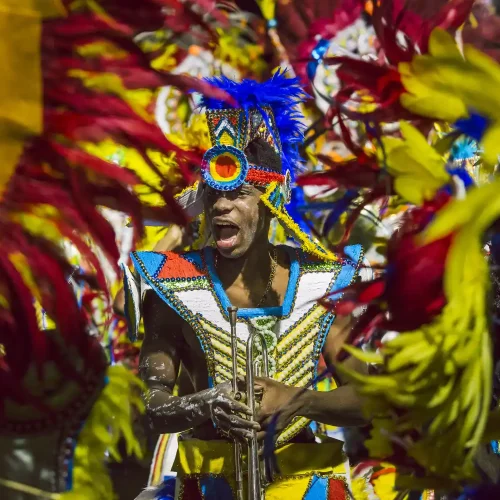
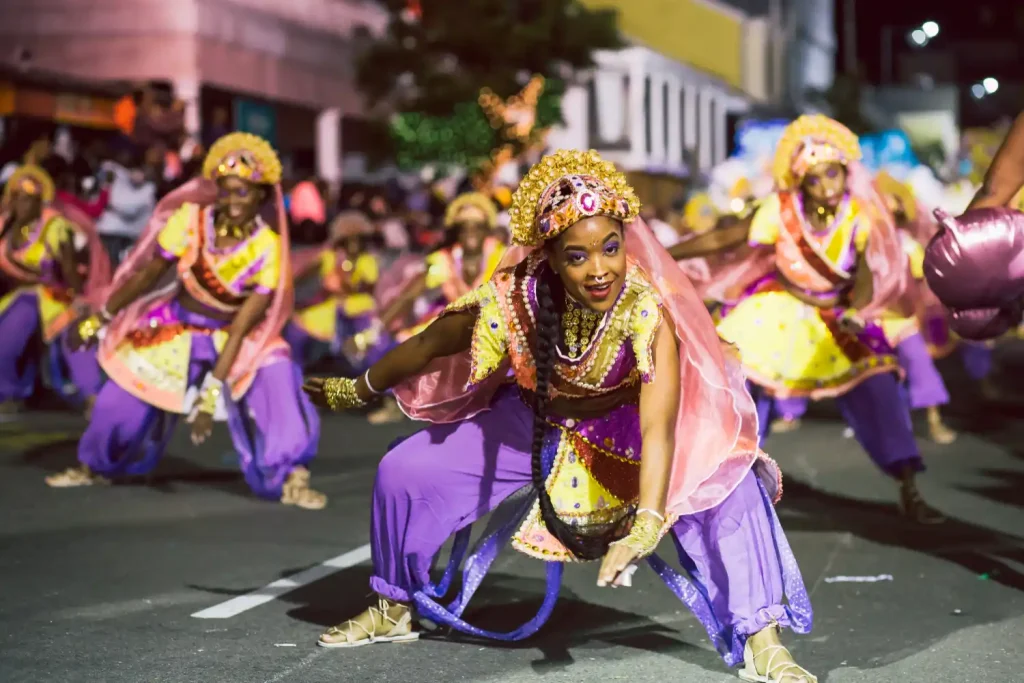
Each year, Bahamians gather along Bay Street for an extraordinary showcase of Bahamian culture, craft, and ingenuity. Groups spend all year preparing: building extravagant costumes, practising music on countless instruments, choreographing elaborate dance routines. On the nights before Boxing Day and New Year’s Day, it all comes together in stunning parades of colour, sound, and motion.
The heartbeat of Junkanoo
The drums never stopped
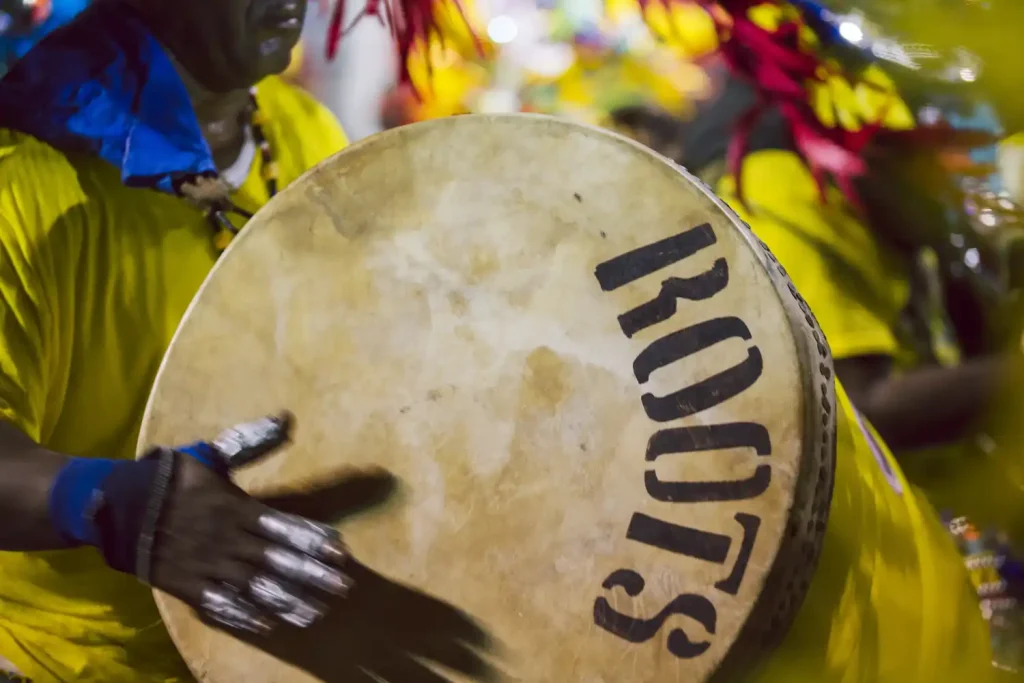
For our ancestors in West Africa, life’s rhythms were interwoven with rhythms played on goatskin drums. Slavers stole our ancestors’ freedom and carried them here in chains, but could not silence the heartbeat of our people. New drums were built here in The Bahamas, beating out a rhythm of resistance in a new festival we called Junkanoo.
The materials
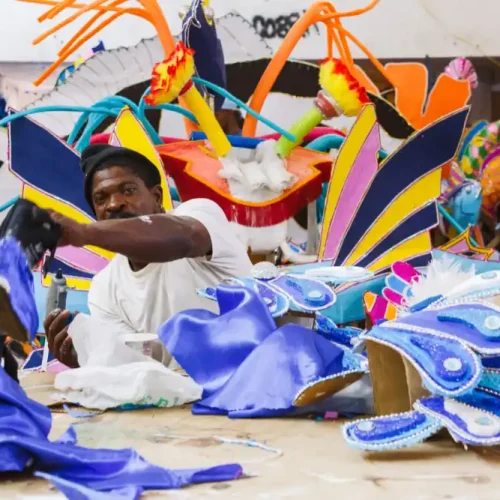
From cardboard to masterpiece
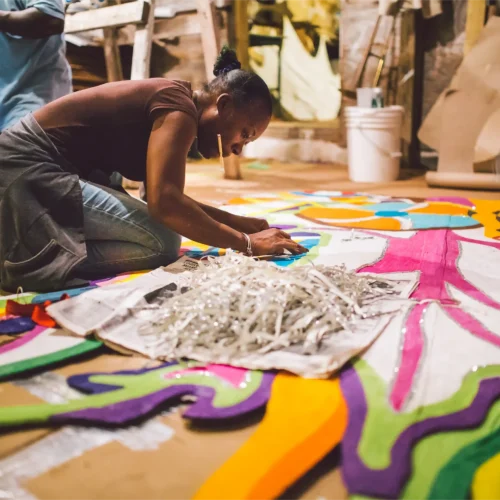
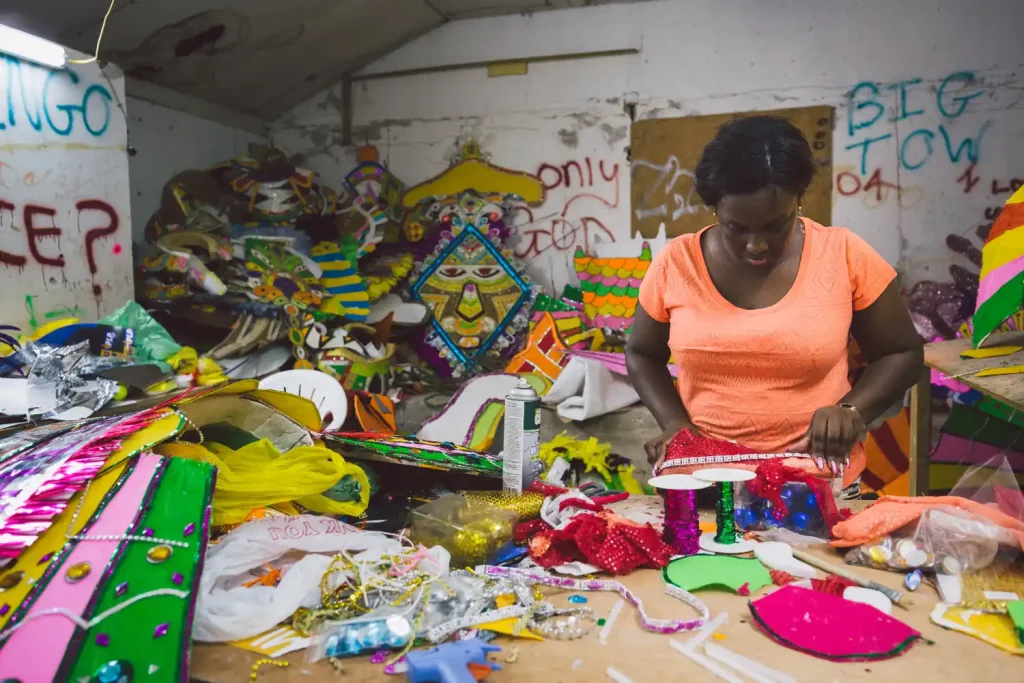
Junkanoo has always featured costumes, and the materials evolve with every generation. Early costumes used sponge from the sea, woven leaves, and a homemade glue and face paint called “pap.” In the 1930s, artists began adding newspaper, then colourful crepe paper once the comics arrived. Today, lightweight aluminium frames inside a cardboard shell support ever bigger, more ambitious costumes, all finished in layers of colourful decoration.
Many voices
The sound of the parade
Every instrument at Junkanoo has its own voice. Drums, from rapid rattles to booming rhythm, made from priceless heirlooms or empty plastic barrels. Horns, trumpets, trombones, tubas, even bicycle horns, bringing brilliant melodies to the parade. Cowbells, usually built by local Junkanooers, easy to play even in an elaborate costume. And conch shells, because Bay Street is only a block from the ocean, so it’s only right the ocean has a voice too.
“Each instrument sounds great on its own. But everything’s better as an ensemble. When they’re all synchronized together, you gotta jump and dance. Now, that’s Junkanoo!”
Wearing who we are
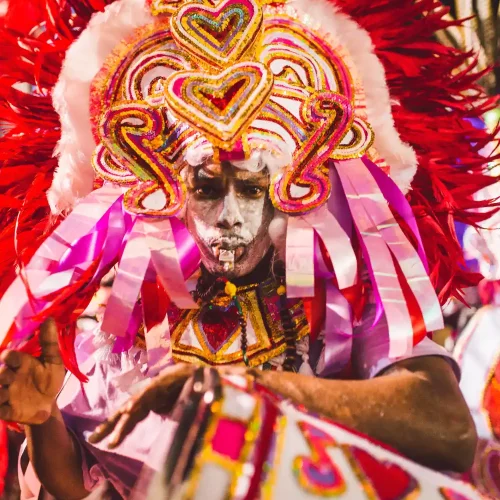
More than dressing up
When Junkanooers go to the shack to pick up their costume, they say, “I come to get me.” Not “my costume,” “me.” For enslaved people, donning a mask fed a yearning for the people and traditions of their homelands, and helped create a safe space to express themselves freely. It helped them feel whole, a glorious defiance of slavery’s dehumanization. Today, there is no need to hide. We joyously wear masks and paint our faces: a tangible connection to our past, and a colourful, beautiful form of individual expression.
Living culture
Months in the making
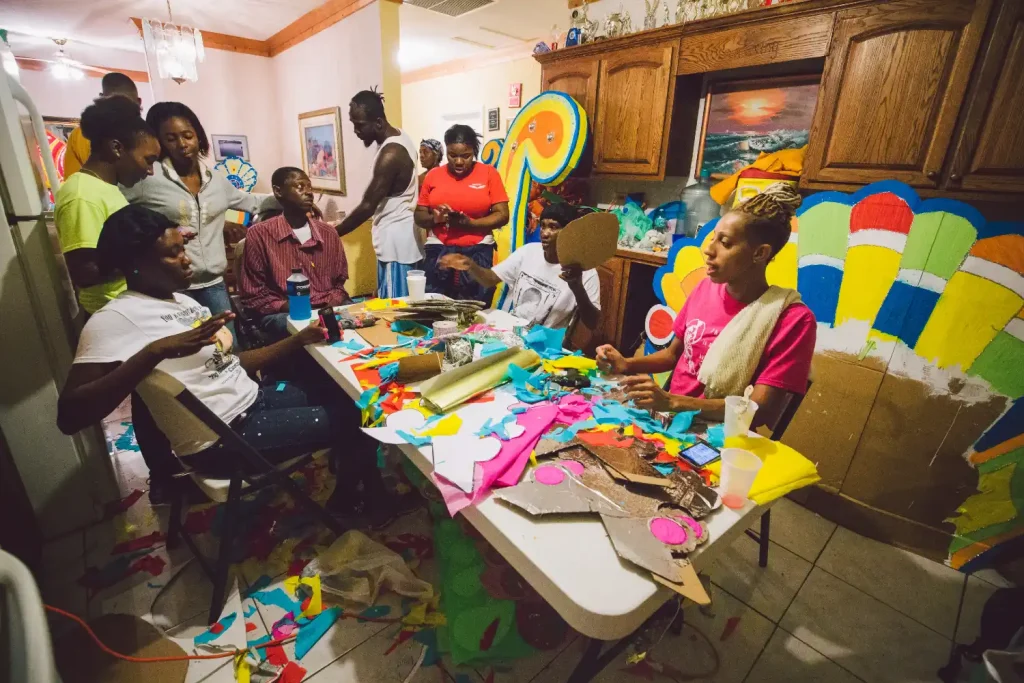
Each major group in the parade presents a spectacular Lead Costume, the most prominent piece of the group. Artists spend months building these joyful masterpieces, labouring over every detail until the very last moment, transforming commonplace materials into carefully engineered works of art.
Living culture
Meet the people behind the festival
Junkanoo is not history under glass. It is made every year by hand, by Bahamians who carry the tradition forward.
Costume builders
The makers who shape wire and crepe paper into the festival’s giant masterpieces.
Drummers
The pulse of the parade, keeping the rhythm that moves the whole street.
Dancers
The movement and joy that turn costume and sound into a living performance.
Paste artisans
The patient hands behind every strand, the same craft you try in the museum.
Five spaces, one story
The exhibit spaces
01
The Roots
The makers who shape wire and crepe paper into the festival’s giant masterpieces.
02
The Materials
From sea sponge and pap to crepe paper and aluminium, the craft across generations.
03
Many Voices
Drums, horns, cowbells, and conch shells. Press the buttons and hear them for yourself.
04
Wearing Who We Are
The meaning behind the mask, and the power it holds.
05
The Centrepiece
Stand before a Lead Costume, months of artistry in one towering piece.
Every visit to The Bahamas has a story
Make yours unforgettable.
Experience the music. Meet the makers. Create something with your own hands. Feel the rhythm that has united generations of Bahamians for more than 300 years.